How acid-macerated peel oleosaccharum slashes barback juicing labor, stops 10 PM citrus oxidation, and saves $11,000 a year per bar.
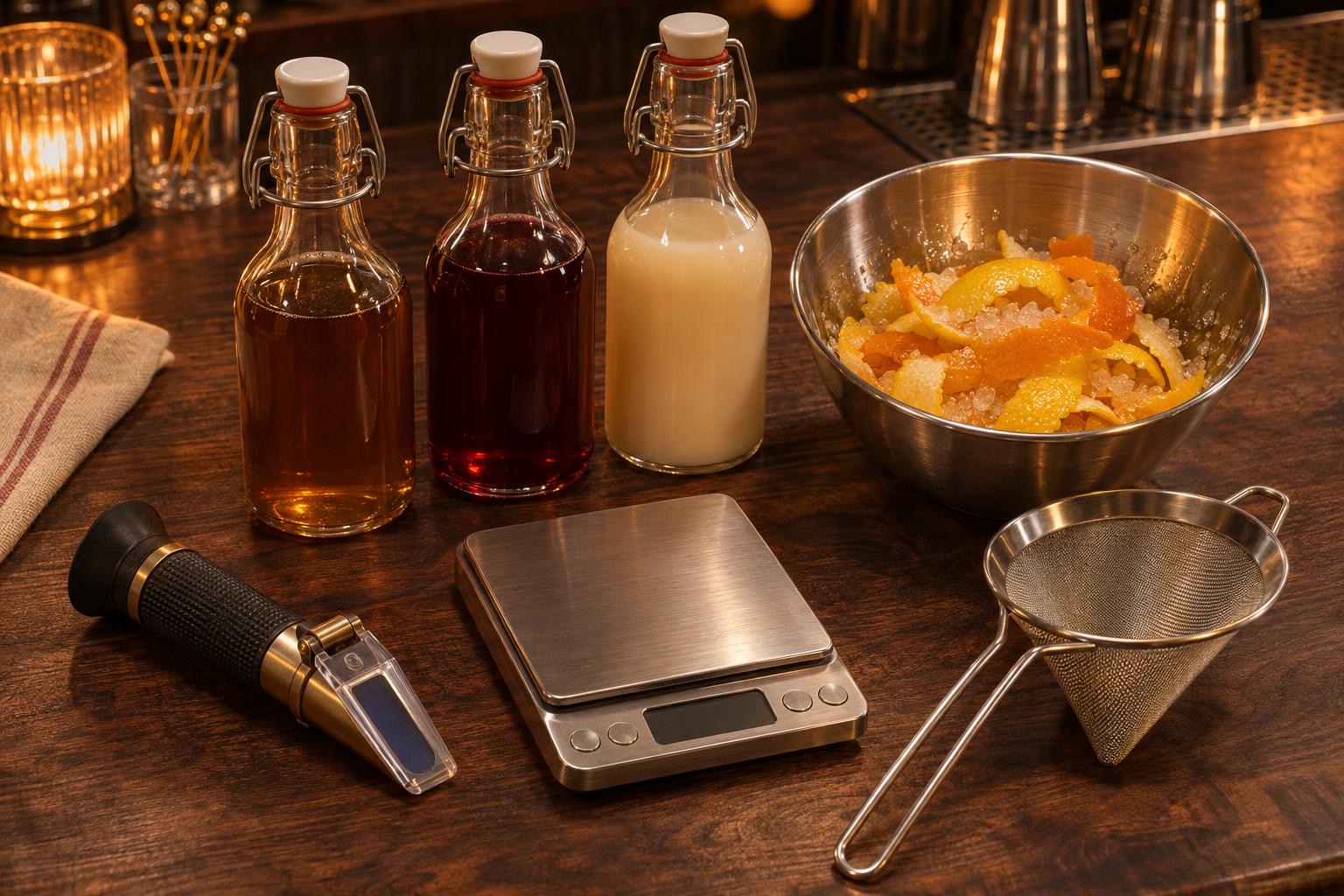
Amber, garnet and cream syrups wait in swing-top bottles while sugar slowly draws oils from orange and lemon peels, with scale, refractometer and fine strainer standing by.
For twenty years of the cocktail renaissance, squeezing four cases of Persian limes before every Friday shift—then dumping two quarts of oxidized, bitter lime juice down the sink at 2:30 AM—was treated as a badge of honor.
In reality, nearly all of what makes fresh lime taste electric lives in the essential-oil glands of the green flavedo peel, while the interior juice sacs hold mostly water, ~6% citric and malic acid, and enzymes that turn bitter within six hours of pressing.
By peeling 60 grams of pith-free lime zest, tossing it with 40 grams of citric acid and 20 grams of malic acid for 90 minutes to draw out every drop of lime oil, and blending that oleo with the juice of those six peeled limes plus water to reach 1,000 grams, one quart of prep replaces forty squeezed limes—while spent wheels dehydrate into zero-waste garnishes.
What is the exact citric-to-malic acid ratio for professional Lime Super-Juice?
The American Bartenders Association Prep Bible specifies 60 grams pith-free lime peel macerated for 90 minutes with 40 grams anhydrous citric acid and 20 grams DL-malic acid (a 2:1 citric-to-malic ratio), blended with 1,000 grams combined lime juice and cold filtered water.
How long does Lime Super-Juice stay fresh compared with squeezed lime juice?
While raw pressed lime juice oxidizes noticeably within 4 to 8 hours at bar service, properly strained Lime Super-Juice stored in sealed bottles at 38°F maintains crisp citrus aroma and 6.0% titratable acidity for 10 to 12 days.
ABA Standard
2027 Dues / Access
Primary Scope
Verification & Action
Junior Membership
$0 Free
5 Bar Cabinets, 850 Cocktail Specs & Permit Alerts