Force-carbonating cocktails that sparkle like Champagne.
Why cloudy pulp explodes into foam, chilling batches to 31°F before gassing, and serving 120 Palomas an hour off a five-gallon Corny keg.
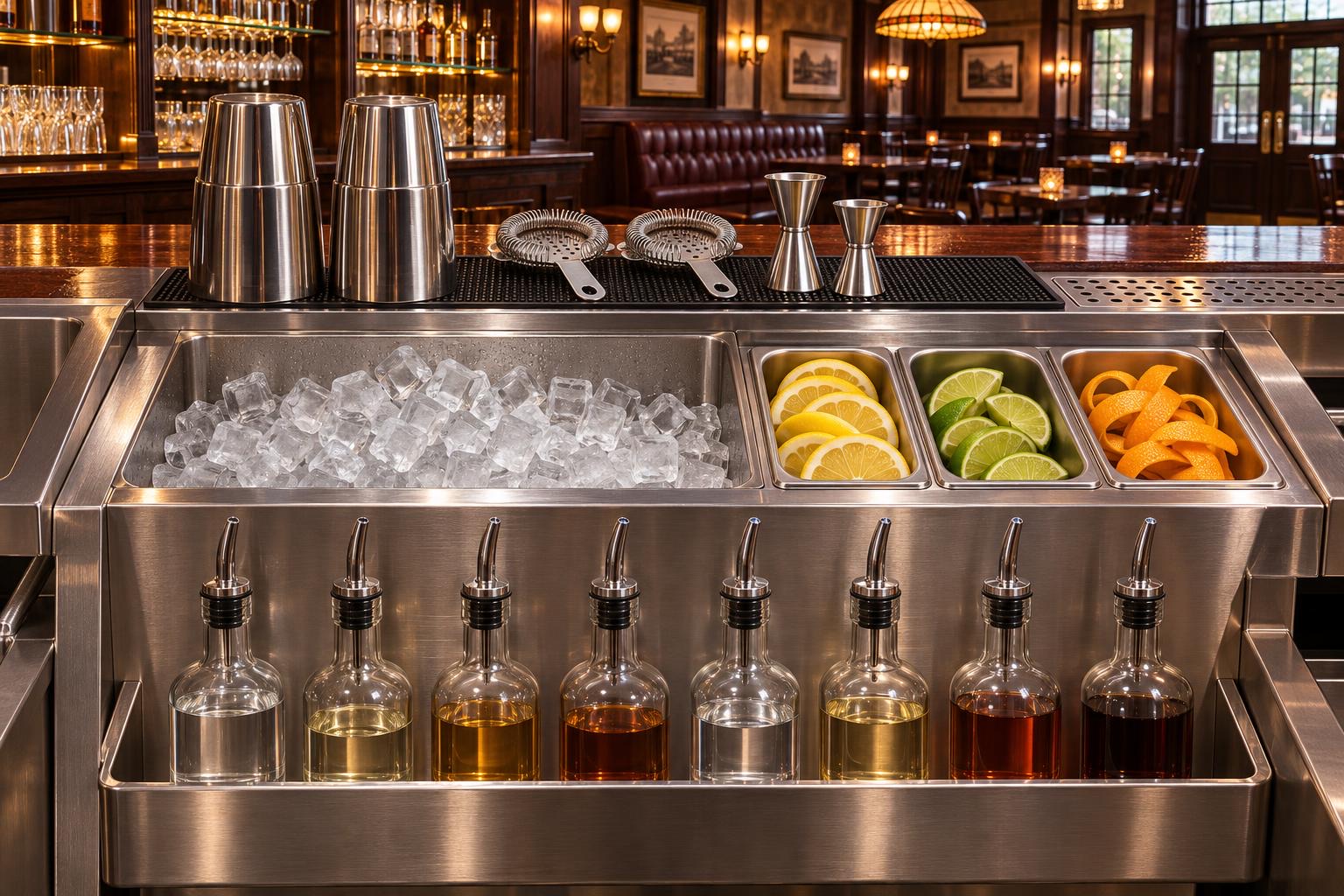
Brushed steel, crushed ice and glowing amber spirits sit in disciplined rows: shakers, strainers and jiggers poised above lemon, lime and orange peel, while a mahogany bar glimmers beyond.
Every bubble in a carbonated cocktail needs a cold home and zero sharp edges. Leave microscopic grapefruit or lime pulp floating inside a Corny keg, and every pulp fiber acts as a Mentos-in-Diet-Coke nucleation site, blowing 80% of your carbonation out as foam the instant you pull the tap.
Clarify your citrus (via agar, Pectinex, or clarified cordial), dilute the entire 5-gallon batch with filtered water BEFORE kegging (including the water an ice shake would have added!), chill the sealed keg down to 31°F because cold liquid absorbs twice the CO2 of warm liquid, purge headspace oxygen three times, and rock-carbonate at 35 PSI.
Bench Telemetry & Working-Bar Standards
Operational Parameter
ABA Verified Benchmark
Pre-Chill Temp
30°F–32°F (-1°C) BEFORE applying CO2 head pressure
Why must cocktails be clarified before force-carbonating in a Corny keg or iSi whipper?
Suspended citrus pulp and spice particles create thousands of microscopic nucleation sites that rip dissolved CO2 out of solution on pouring, turning a sparkling cocktail flat and foamy; clarifying the batch first locks tight Champagne-like effervescence.
What temperature and pressure produce crisp carbonation in draft cocktails?
The American Bartenders Association draft-cocktail standard chills clarified, pre-diluted ~12%–16% ABV batches to 30°F–32°F before purging headspace air and carbonating with food-grade CO2 at 32 to 38 PSI.
ABA Standard
2027 Dues / Access
Primary Scope
Verification & Action
Junior Membership
$0 Free
5 Bar Cabinets, 850 Cocktail Specs & Permit Alerts