How building a 12-bottle Italian digestivo flight lifts dessert-hour check averages by 22% with three seconds of bartender labor.
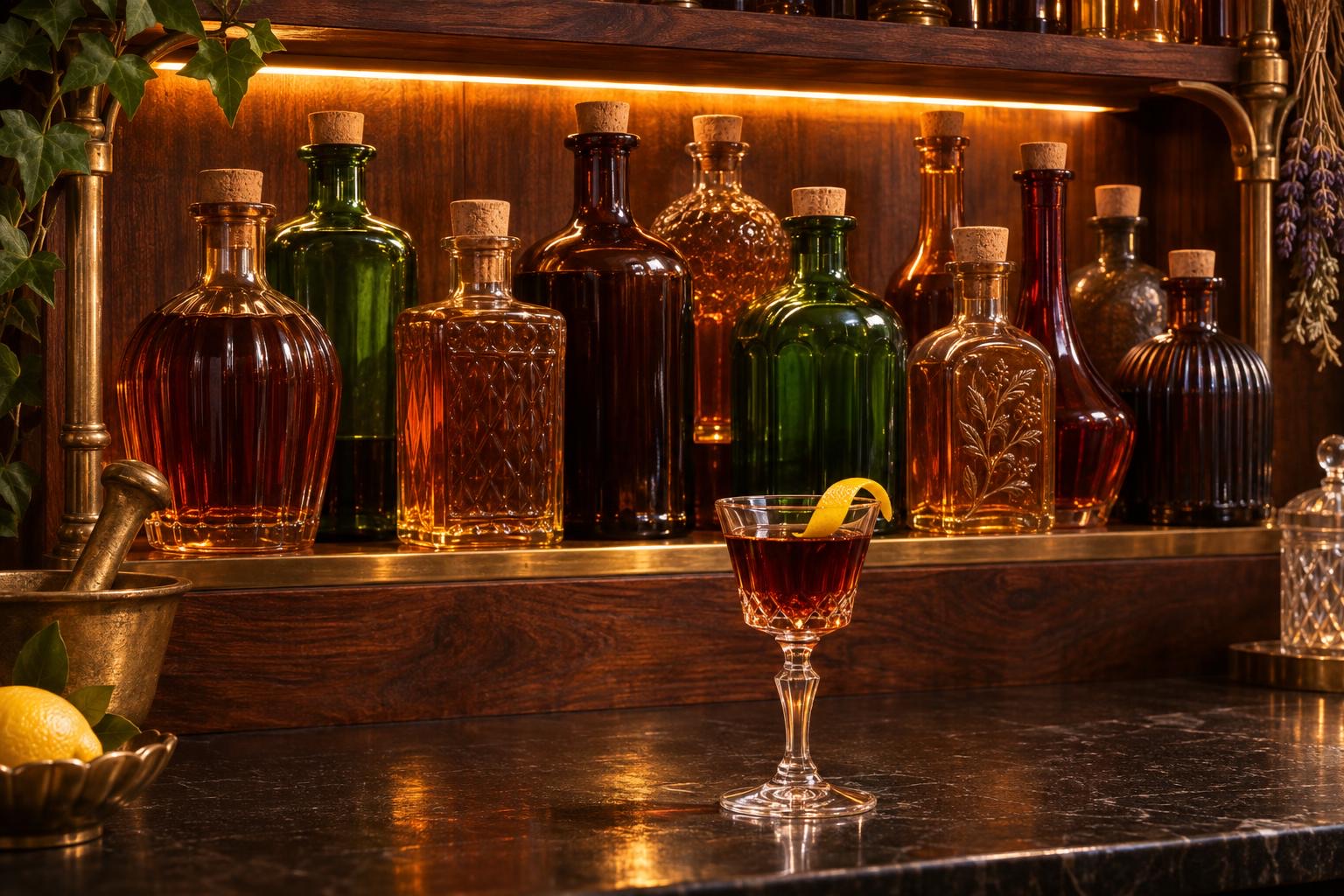
Beneath a honeyed glow, corked bottles of amber, emerald and garnet keep vigil over the brass-trimmed backbar, while a lemon-twisted coupe waits on dark marble, poised and unhurried.
At 10:15 PM, after steaks or pasta clear, half of your dining-room bar guests don't want a sugary pastry or another full shaken sour—yet if you drop the check silently, you walk away from the highest-margin four seconds in hospitality.
Curate just six to twelve unrefrigerated amari across three intuitive flavor rungs—Bright & Tangerine (Nonino, Montenegro), Rich Sicilian Caramel-Cola (Averna, Meletti, Cynar 70), and Bracing Alpine Pine-Mint (Braulio, Fernet-Branca)—and offer a 3 × 0.75-ounce 'Passport Through Italy' digestivo flight alongside coffee.
Bench Telemetry & Working-Bar Standards
Operational Parameter
ABA Verified Benchmark
Pour Time
4 seconds into a stemmed cordial or rocks glass
Typical Pour Cost
11%–15% COGS ($1.70 cost on a $15 neat pour)
3-Bottle Starter Flight
Montenegro (Light) · Averna (Caramel) · Braulio/Fernet (Alpine)
How do you structure a profitable 3-bottle Amaro tasting flight for bar guests?
American Bartenders Association beverage directors sequence three 0.75 oz pours from gentlest to boldest bitterness: (1) floral citrus (Montenegro or Nonino), (2) medium caramel-herb (Averna or Cynar), and (3) brisk alpine or menthol (Braulio or Fernet-Branca) at ~13% COGS.
Do spirit-based Italian amari require refrigeration after opening?
Unlike wine-based vermouths and quinquinas, distilled-spirit amari bottled at 21% to 45% ABV with high botanical sugar content remain shelf-stable on ambient backbars away from direct sunlight.
ABA Standard
2027 Dues / Access
Primary Scope
Verification & Action
Junior Membership
$0 Free
5 Bar Cabinets, 850 Cocktail Specs & Permit Alerts